Industrial dryer burner sizing starts with the amount of water the dryer must remove each hour. A dryer processing 1,000 kg/h of material at 30% inlet moisture must evaporate about 222 kg/h of water to reach 10% outlet moisture, assuming both figures are on a wet basis and the dry solids are conserved. The dryer manufacturer then uses that evaporation rate, together with the airflow and heat losses, to calculate the required burner input. [1]
Calculate Water Evaporation From Feed Rate and Moisture
On a wet basis, moisture content is the mass of water divided by the total mass of the material. Confirm the basis with your dryer supplier before comparing quotations. If a laboratory reports moisture on a dry basis, convert it to a wet-basis fraction by dividing the dry-basis fraction by one plus that fraction. For example, 25% dry-basis moisture equals 20% wet-basis moisture.
For a continuous dryer with negligible loss of dry solids, use this sequence. [1]
| Calculation | Example |
|---|---|
| Incoming wet material | 1,000 kg/h at 30% wet-basis moisture |
| Dry solids entering the dryer | 1,000 × (1 − 0.30) = 700 kg/h |
| Finished product at 10% moisture | 700 ÷ (1 − 0.10) ≈ 778 kg/h |
| Water evaporated | 1,000 − 778 ≈ 222 kg/h |
Subtracting 10% from 30% and applying that difference to the original 1,000 kg/h gives 200 kg/h. That calculation applies both percentages to the same mass, even though the product weighs less after drying.
At the same throughput and outlet target, a rise in inlet moisture from 30% to 35% increases the evaporation requirement to about 278 kg/h, an increase of 25%. For seasonal raw materials or feeds that vary by batch, ask the dryer supplier to calculate a separate heat balance at the highest expected moisture and throughput that can occur together.
Convert the Evaporation Load Into Burner Heat Input
Evaporating water is one part of the heat balance. The system also heats the incoming solids and their moisture, warms makeup air, and loses heat through the dryer casing and exhaust. The dryer supplier uses these loads, along with any heat recovery, to calculate the required heat delivered by the heating system. A burner quotation should state the fuel heat input, the fuel heating-value basis, and the assumptions used to estimate how much heat reaches the dryer. [1, 2]
Confirm the heating arrangement with the dryer manufacturer. In a direct-fired hot-air system, combustion products enter the process gas stream. An indirect-fired air heater transfers heat across a heat exchanger and keeps the combustion exhaust separate from the process air. Specify whether the product can contact combustion gases, then ask the supplier to identify the losses and air-side pressure drop for the proposed arrangement. [2, 3]
Check How the Dryer Operates at Low Load
Give the burner supplier two operating points: the highest realistic drying duty and the lowest sustained production duty. The first sets the required maximum input. The second helps the supplier check whether the burner can hold the dryer inlet temperature when feed rate or inlet moisture drops. For a retrofit, measured airflow, temperature trends and fuel consumption at known production rates give the supplier a starting point for checking the existing heat balance.
Ask the dryer manufacturer to confirm the required hot-air temperature and airflow at each point, along with the pressure drop across the heater and ducting. These figures help the supplier check the burner and hot-air generator as a system. [1]
What to Send With a Dryer Burner Inquiry
Material and throughput: Product name and minimum, normal, and maximum wet feed rates in kg/h.
Moisture: Typical and maximum inlet moisture, target outlet moisture, and the measurement basis for each.
Dryer and air conditions: Dryer type, required inlet-air temperature and airflow, makeup-air conditions, and any air recirculation.
Heating and fuel: Direct or indirect heating requirement, fuel type and available gas pressure for gas-fired systems.
Existing equipment: For replacements, share the burner nameplate, heater drawings, and any measured operating data.
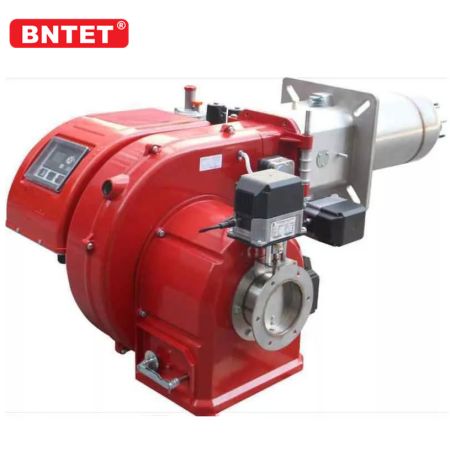
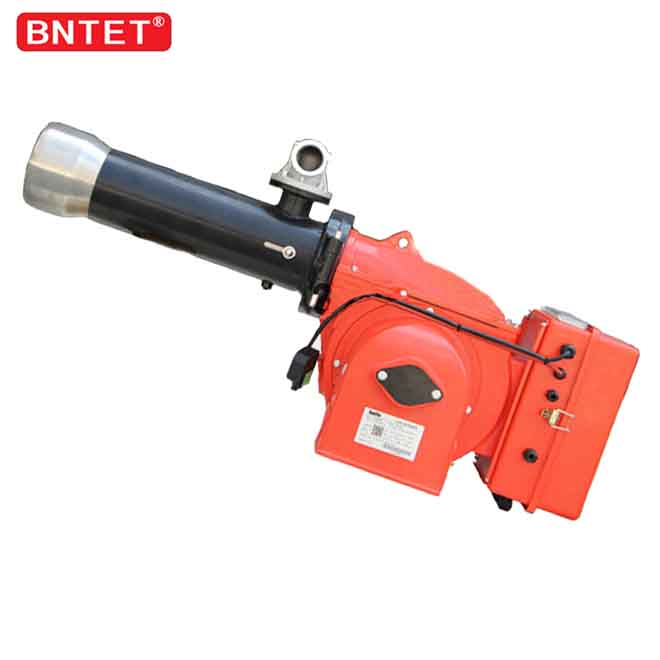
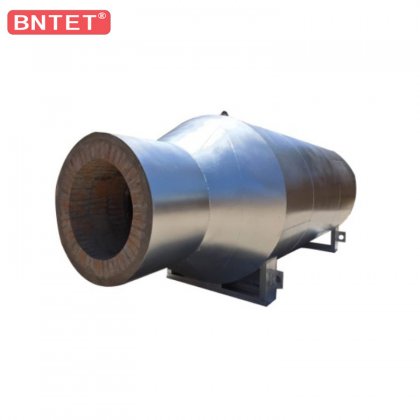
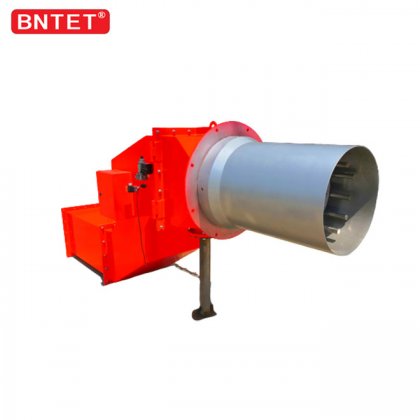
BNTET’s BNS Series Horizontal Hot Air Furnace can be configured for direct combustion or indirect heat exchange. See the hot-air furnace and gas burner project for an example of a package supplied for dryer integration. Send BNTET your feed and moisture data to start a configuration review.
Technical References
European Commission Joint Research Centre — Energy Efficiency Reference Document, Section 3.11.3
Massachusetts Department of Environmental Protection — Thermal Drying Technologies