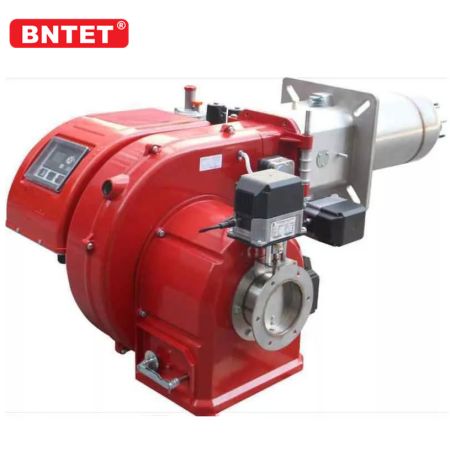
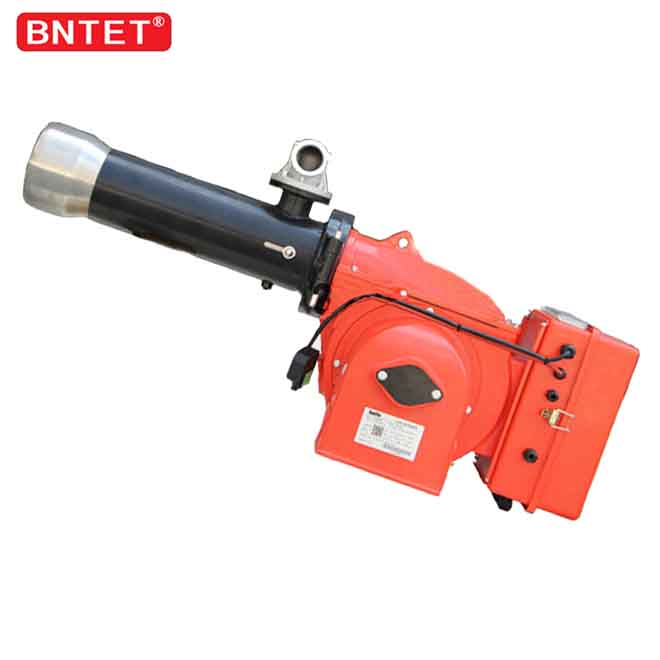
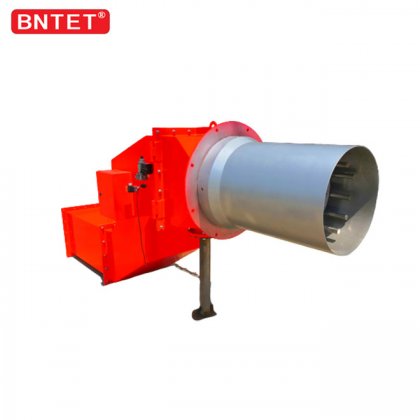
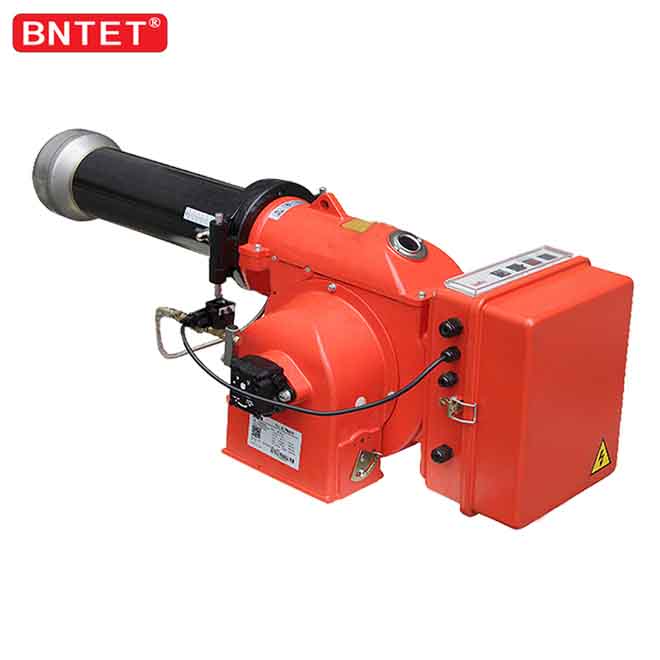
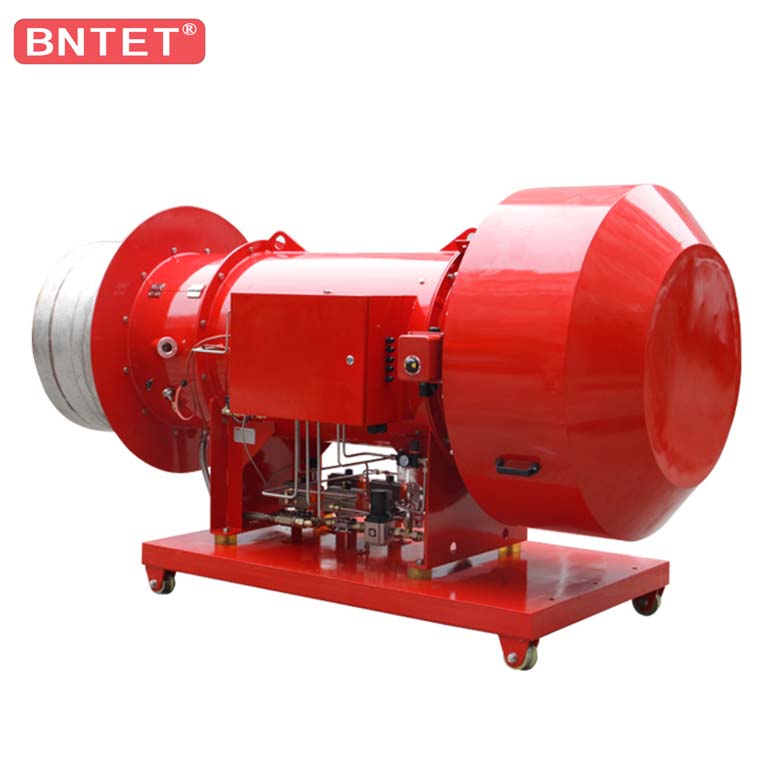
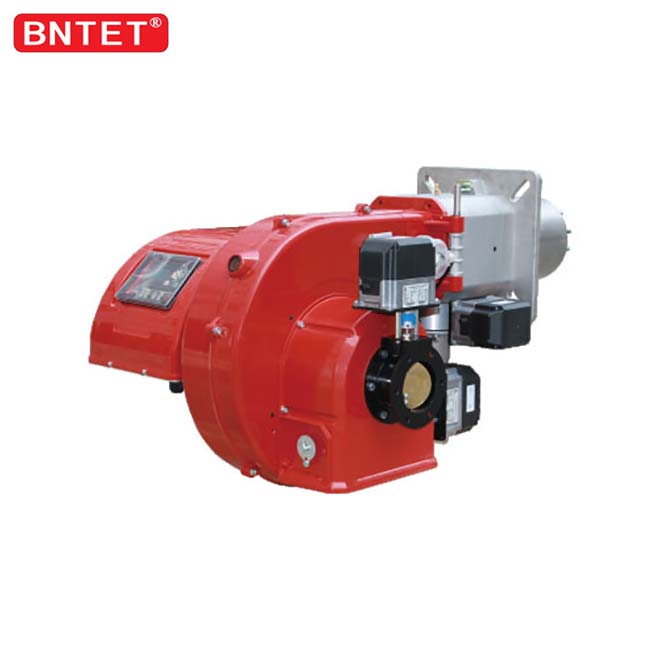
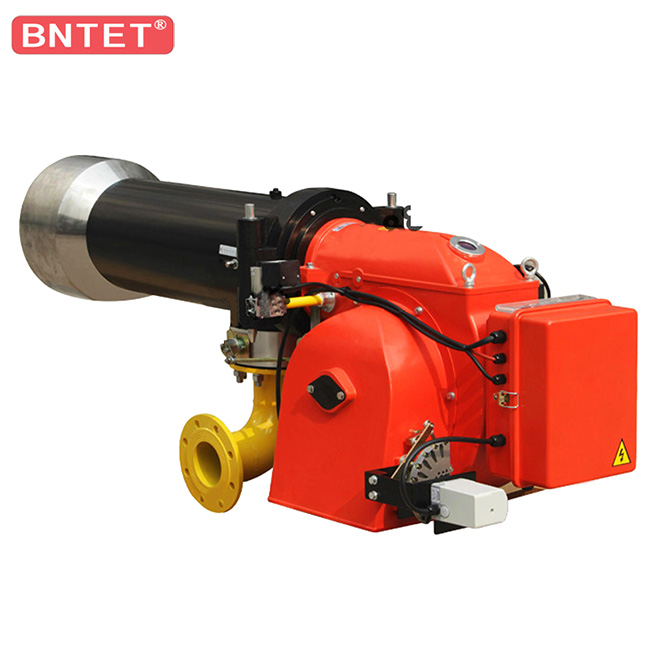
An industrial boiler burner rated at 1,200 kW under catalog conditions may have a lower approved firing rate at a high-altitude site. Lower atmospheric pressure reduces the mass of combustion air the fan delivers at a given volumetric flow. Hot air at the fan inlet can reduce that mass further. When selecting a burner for an elevated site, check whether it can deliver the required fuel heat input at the boiler's actual combustion chamber pressure under the expected intake-air conditions. [1, 2]
Why Altitude Changes Burner Capacity
A cubic metre of air at higher elevation contains less oxygen by mass because the air is less dense. If the combustion fan moves the same volume of air, it supplies less oxygen to burn the fuel. Lower air density can also reduce the pressure rise a fan develops at a given speed and volumetric flow. A boiler with positive combustion chamber pressure can therefore pose two challenges at high fire: supplying enough air by mass and developing enough pressure to deliver it. [1, 2]
Use the air temperature at the burner or fan inlet for the selection review. A burner drawing air from a hot boiler room may see a higher intake temperature than the outdoor weather data suggest. For a ducted intake, share the duct layout and any filters or louvers so the supplier can account for inlet pressure losses as well. [2]
How to Check a Burner Firing Curve at High Altitude
A firing-range chart shows the combinations of fuel heat input and combustion chamber pressure that a burner can support under specified conditions. Ask for the reference altitude or barometric pressure and inlet-air temperature behind the chart. Then provide your site's conditions and request a corrected operating range or a written selection check for the proposed model. [2]
Suppose a boiler requires 1,000 kW of fuel input at +6 mbar chamber pressure at full load. A catalog rating of 1,200 kW gives a starting point for screening models. To confirm the selection, the supplier needs to verify the 1,000 kW operating point at +6 mbar under the site's intake conditions. If the burner modulates, also ask for confirmation of the minimum stable firing rate on the same boiler.
When Is Burner Derating Needed?
Burner derating means reducing the approved maximum fuel input for the installation conditions. The amount depends on the burner model, combustion air system and boiler operating point. Ask the manufacturer to confirm the site rating using its own correction method. If that rating falls below the required load, ask whether a different burner or an approved fan configuration can deliver the specified duty. [1, 2]
At commissioning, a qualified technician should verify combustion at the relevant firing points, record flue-gas oxygen and carbon monoxide readings, and document the verified firing range for the installed boiler. [3]
What to Send With a High-Altitude Burner Inquiry
| Project data | What to provide |
|---|---|
| Site elevation | Metres above sea level and site barometric pressure if available |
| Combustion air intake | Expected temperature range at the fan inlet, plus duct and filter details if applicable |
| Firing duty | Required minimum and maximum fuel heat input in kW or MW, with the fuel heating-value basis |
| Boiler chamber pressure | Expected pressure at the relevant firing points, with units and measurement reference |
| Fuel supply | Fuel type and heating value, plus available inlet pressure for gas-fired projects |
For a new boiler or a replacement burner, send your project data to BNTET for a model review. If you are still gathering boiler drawings or fuel data, see our industrial boiler burner selection guide for the rest of the information needed to prepare an inquiry.
Frequently Asked Questions
Can high intake-air temperature affect a burner at sea level?
Yes. Hotter air is less dense at the same pressure. Check whether the expected fan-inlet temperature differs from the rating conditions and ask the supplier to confirm the available firing range. [2]
Does every burner need the same altitude correction?
The correction is model-specific. Use the burner's published method or the manufacturer's written selection for the combination of altitude, intake temperature and boiler pressure. [1, 2]