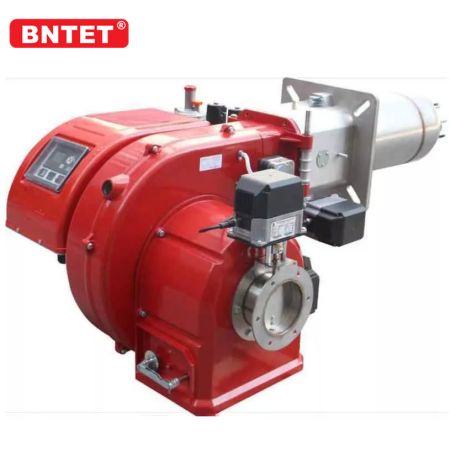
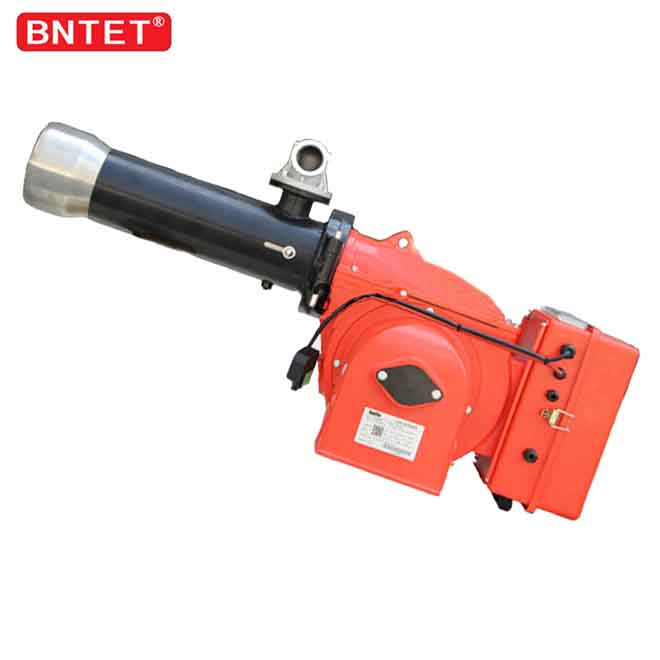
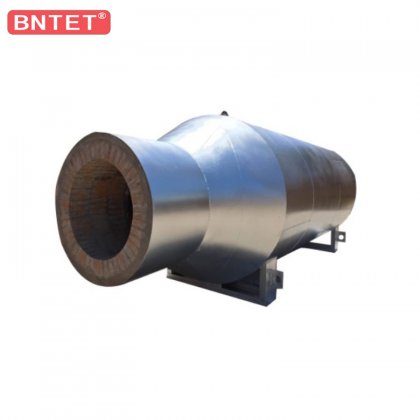
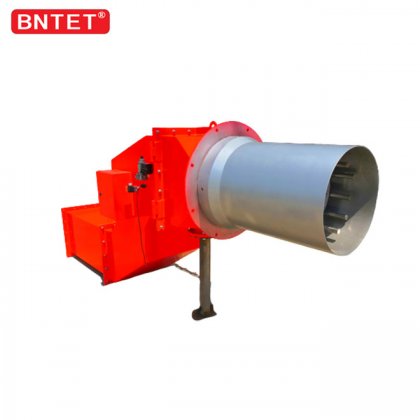
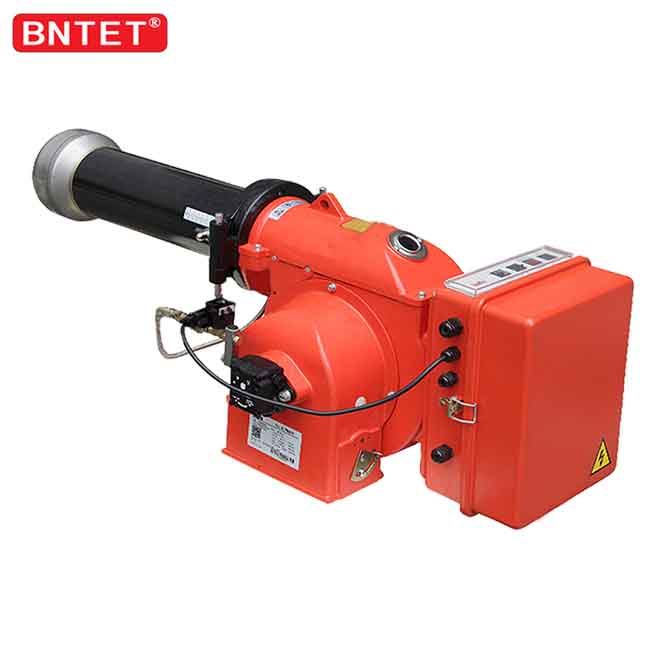
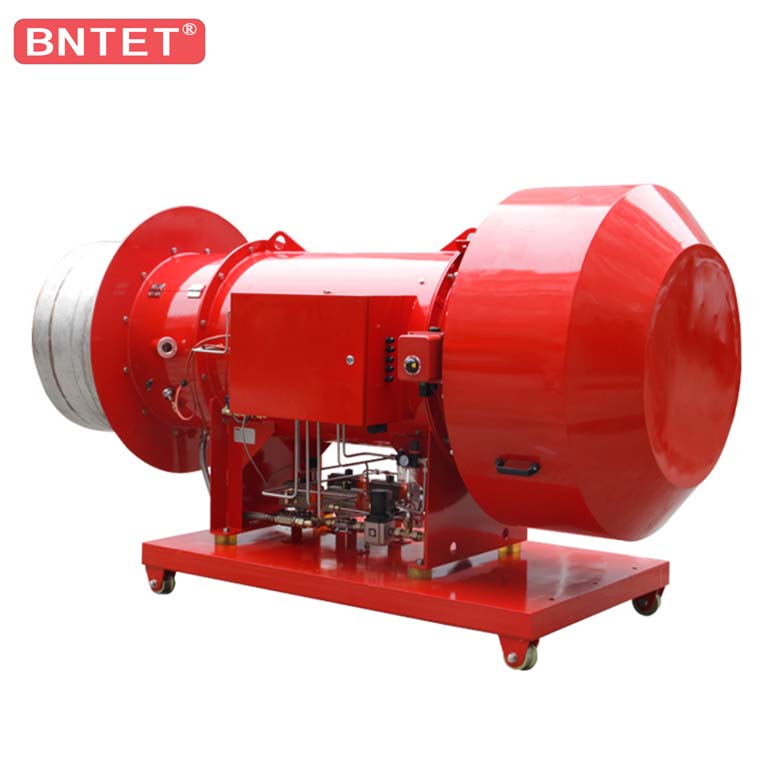
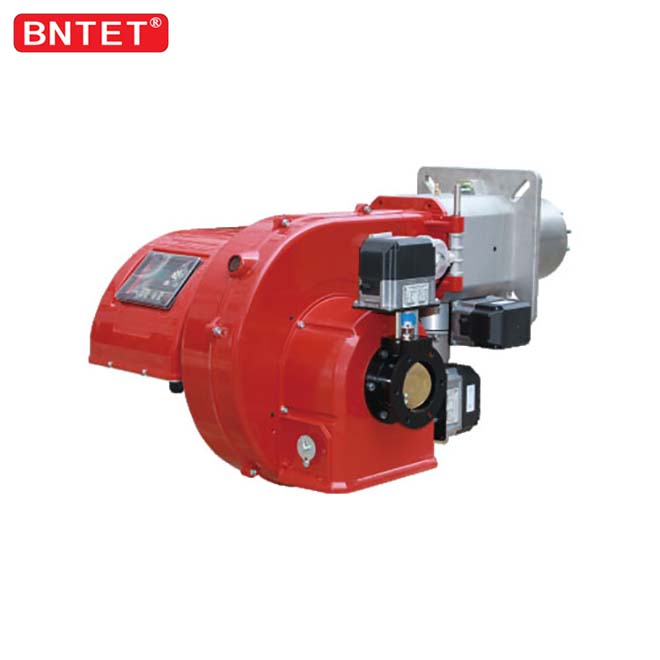
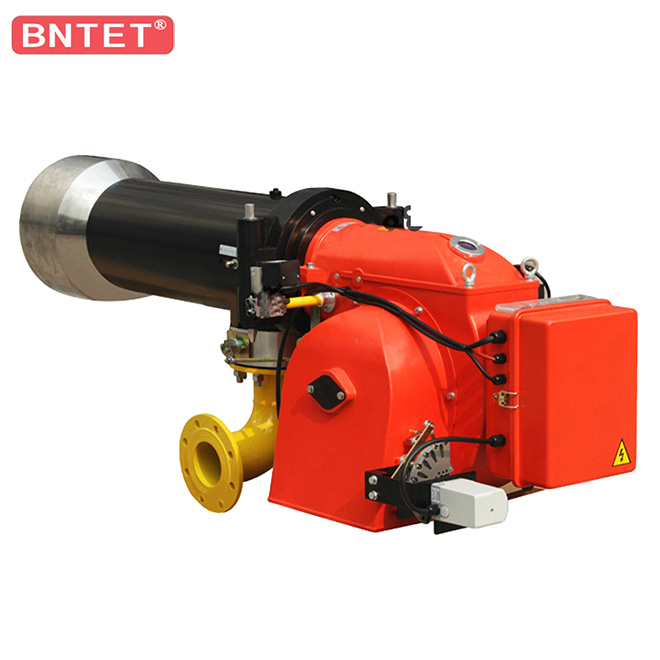
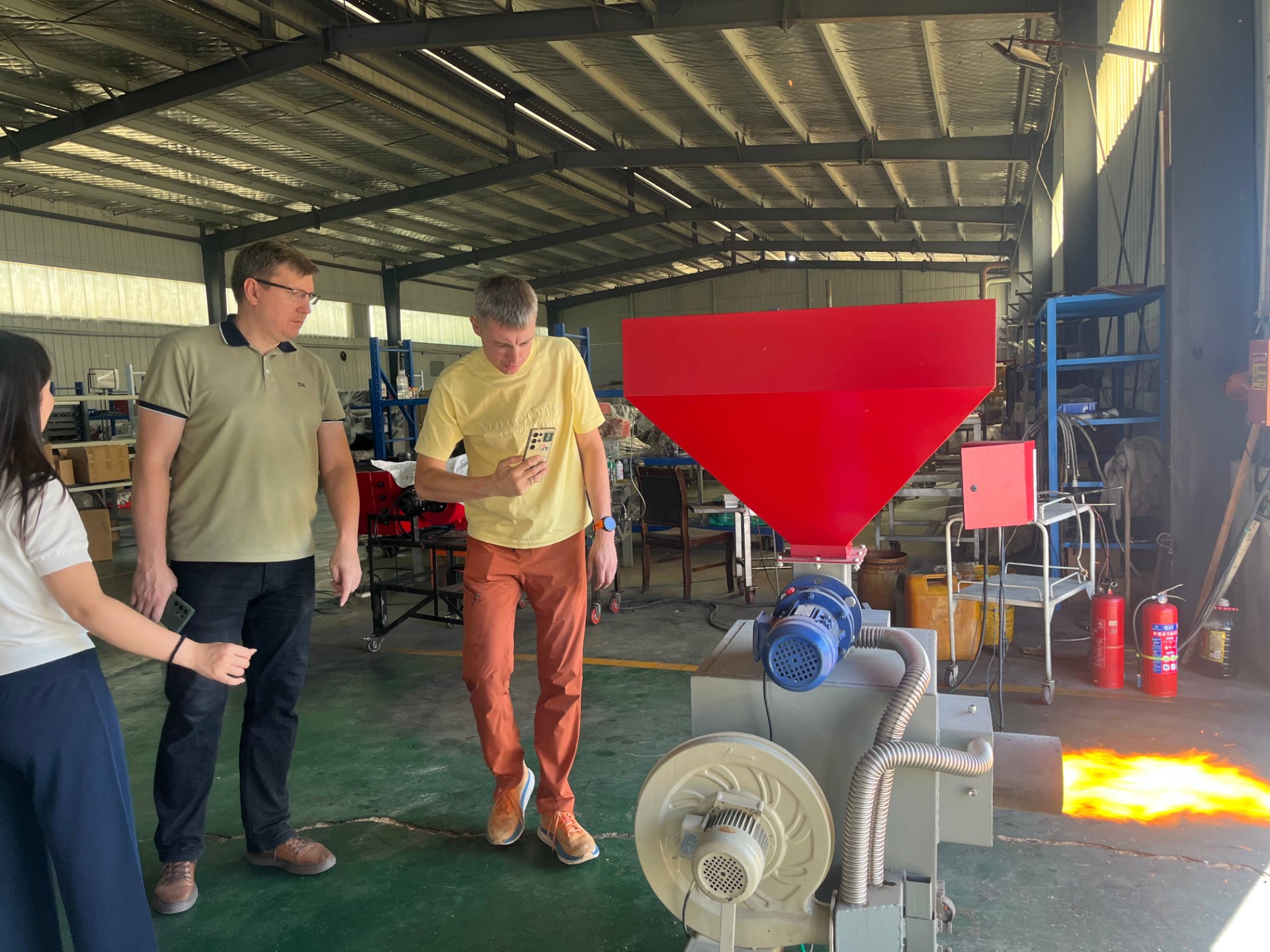
BNTET recently welcomed a client from Russia to its production facility for a closer look at its biomass burner solutions. The visit focused on the burner structure, fuel feeding arrangement and the information needed to select equipment for a specific heating project.
Unlike a gaseous fuel, solid biomass can vary considerably from one delivery to the next. Moisture, ash content, particle size and heating value all affect how a fuel is handled and burned. The U.S. Department of Energy identifies this variability as a source of challenges in biomass processing and equipment operation. [1] For that reason, the discussion began with the proposed fuel rather than a burner model number.
Start with the Actual Fuel
During the technical exchange, the BNTET team and the visitor discussed the type of biomass available for the project and how it would be delivered to the burner. Wood pellets, wood chips and other solid fuels may require different feeding and combustion arrangements. Even pellets with a similar appearance can differ in moisture, fines and ash content.
For wood pellets, the ENplus quality scheme assesses properties including dimensions, mechanical durability, fines, ash, moisture and calorific value. [2] These are useful examples of information to request from a fuel supplier. A certificate for one fuel batch should not be assumed to describe every future delivery.
Before final equipment selection, project teams should confirm the intended fuel or fuel blend and obtain representative test results. They should also define what changes in fuel specification the proposed system can accommodate. This makes later commissioning and troubleshooting more straightforward.
Feeding Stability and Back-Burning Protection
The client examined the feeding system and discussed the path from fuel storage to the combustion zone. Particle size and fines can affect how reliably solid fuel moves through a hopper and screw conveyor. A design review should therefore consider the actual fuel dimensions, the expected feed rate and access for clearing a blockage.
A second concern is the possibility of heat or flame travelling back toward the fuel supply. Appropriate separation, monitoring and shutdown functions must be reviewed for the particular burner and installation. The exact protective devices and test sequence should be confirmed in the project’s technical documents; the factory visit alone does not establish that every possible fuel and site condition has been covered.
Why Ash and Slagging Matter
Biomass combustion leaves ash that must be removed. Some fuels can also produce deposits in hot passages or on boiler heat-transfer surfaces. Ash behavior depends on both fuel composition and operating conditions. IEA Bioenergy notes that ash chemistry and fusion behavior are important when evaluating slagging and fouling risks. [3]
The discussion therefore covered the burner’s ash removal arrangements and access for inspection and cleaning. For a boiler retrofit, the burner must also be considered alongside the existing furnace and downstream heat-transfer surfaces. A fuel with a higher ash content may increase the cleaning workload; ash percentage alone does not predict the full slagging risk.
Matching the Burner to the Heating System
A useful biomass burner proposal needs more than the required heat output. BNTET asks customers to provide the fuel analysis, expected fuel size, moisture and ash content, required thermal load, boiler or furnace drawings, combustion chamber dimensions, electrical supply, operating schedule and applicable emissions requirements.
These details help the engineering team review the fuel feeding method, combustion air arrangement, installation interface, ash removal access and control functions. The final configuration and performance targets should be confirmed against the actual fuel and heating equipment during project engineering and commissioning.
The visit allowed both sides to identify the technical information needed for the next stage of cooperation. BNTET will continue discussing equipment selection and project requirements with the client as the fuel and installation data are finalized.
Planning a biomass heating project? Send BNTET your fuel analysis and equipment details to discuss a suitable burner configuration.
Frequently Asked Questions
Can one biomass burner use any pellet or chip fuel?
No. The allowable fuel range depends on the burner and feeding system. Confirm particle size, moisture, ash and heating value against the proposed configuration.
Does low ash content guarantee that fuel will not cause slagging?
No. Ash composition and operating conditions also matter. Fuel testing and a review of cleaning access help assess the risk. [3]
What should I send before requesting a biomass burner quotation?
Send a representative fuel analysis, fuel size, required heat output, boiler or furnace dimensions, power supply, operating hours and local emissions requirements.
References (English Sources)
U.S. Department of Energy. Variability — Understanding the True Complexity. https://www.energy.gov/cmei/fuels/articles/variability-understanding-true-complexity
ENplus. A Quality Scheme. https://enplus-pellets.eu/language/en/a-quality-scheme-uk/
IEA Bioenergy. Biomass pre-treatment for bioenergy — Case study 5: Leaching as a biomass pre-treatment method for herbaceous biomass. https://itp-fueltreatment.ieabioenergy.com/publications/biomass-pre-treatment-for-bioenergy-case-study-5-leaching-as-a-biomass-pre-treatment-method-for-herbaceous-biomass/