Abstract
Within continuous drum and batch-type asphalt mixing installations, aggregate drying and heating represent the primary energy-consuming stage, accounting for over 60% of total plant fuel consumption[2, 5]. Operating at the front of a rotating dryer drum, asphalt mixing plant burners encounter harsh industrial conditions characterized by dynamic aggregate moisture fluctuations, abrasive mineral dust, high secondary air drafts, and strict stack emission limits[1, 4]. Engineered by Bona Thermal Energy (BNTET), this engineering analysis evaluates flame aerodynamics within aggregate dryers, dynamic turndown ratio controls, multi-fuel atomization systems, and emissions abatement strategies essential for modern road infrastructure projects[3, 6].
1. Thermodynamic Demands of Aggregate Dryer Integration
The combustion process in an asphalt plant differs significantly from that in an enclosed boiler furnace[1, 7]. The burner flame fires into an open rotary drum equipped with internal lifter flights that shower aggregate through the gas stream:
                      Asphalt Aggregate Dryer Drum
                                   │
       ┌───────────────────────────┴───────────────────────────┐
       ▼                                                       ▼
Combustion Zone (Clear Flame Envelope)       Radiant & Convective Drying Curtain
Length: 3 to 6 Drum Diameters                Aggregate Showering via Flighting
Zero Droplet / Fuel-Veil Contact             Rapid Evaporation of 3% to 8% Moisture
       │                                                       │
       └───────────────────────────┬───────────────────────────┘
                                   │
                                   ▼
          Negative Pressure Exhaust to Baghouse Dust Collector
          (Requires Precise Draft Balancing to Prevent Flame Puffing)
Flame Geometry Management: The burner must produce a stable, cylindrical, and rigid flame profile that does not impinge on falling mineral aggregate or drum shell refractory walls[3]. Unburned fuel droplets contacting cold rock fragments cause severe unburned hydrocarbon (UHC) emissions and foul downstream fabric filter baghouses with sticky carbon soot[2].
Moisture-Driven Turndown Modulation: Raw aggregate moisture contents vary from 2% to over 8% depending on weather conditions. This demands a responsive burner management system capable of modulating thermal output across broad turndown ratios (up to 1:8 or 1:10) without experiencing flame instability, flashback, or CO spikes[4, 6].
Induced Draft Pressure Balancing: Large exhaust draft fans pull combustion air and vapor through the drum into the dust collection array. The burner must incorporate an adaptive air damper linkage or variable-frequency drive (VFD) blower control to maintain stoichiometric balance against fluctuating draft pressures[1].
2. Multi-Fuel Combustion and Atomization Engineering
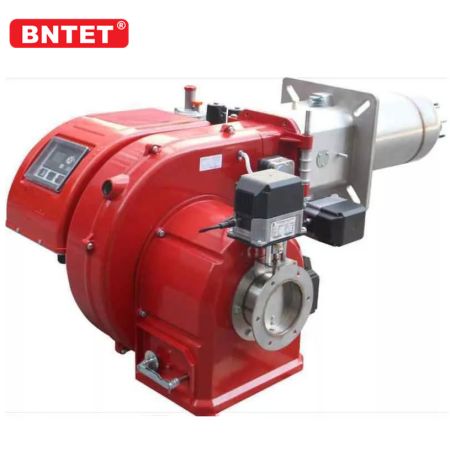
To help road construction contractors minimize operating expenditure, modern asphalt mixing plant burners feature multi-fuel firing platforms compatible with natural gas, liquefied petroleum gas (LPG), light diesel, heavy fuel oil (HFO), and recycled waste oils[3, 5]:
| Engineering Parameter | Gaseous Fuels (Natural Gas / LPG) | Light Distillate (Diesel / Gas Oil) | Heavy / Residual Oils (HFO, Waste Oil) |
| Atomization Method | Kinetic Radial Injection Nozzles | High-Pressure Mechanical Jet[7] | Compressed Air / Saturated Steam Assist[3] |
| Fuel Preheating | Ambient Delivery | Ambient Delivery | Preheated to 90°C – 125°C (< 20 cSt)[2] |
| Turndown Ratio | 1:8 to 1:10 (Precision Gas Train) | 1:4 to 1:6 (Standard Pressure Jet) | 1:6 to 1:8 (Internal Mixing Nozzle) |
| Thermal Output Range | 7 MW – 45 MW (50 – 400 t/h Plant) | 7 MW – 45 MW (50 – 400 t/h Plant) | 7 MW – 35 MW (Heavy Slag Control) |
| Maintenance Cycle | Low (Minimal nozzle carboning) | Low (Routine filter element checks) | Medium (Periodic tip flushing with diesel) |
For heavy oils and recycled lubrication fluids, pneumatic twin-fluid atomizers use compressed air (4 to 6 bar) to shear viscous fuel ligaments into fine droplet mists below 40 microns, preventing unburned residue from settling inside the aggregate drying zone[3, 7].
3. Structural Robustness and Environmental Controls
Field-deployed units in asphalt applications must withstand extreme outdoor vibration, heavy dust concentrations, and continuous operation:
Heavy-Duty Chassis Construction: Housings are fabricated from heavy-gauge structural carbon steel coated with industrial polyurethane finishes to resist atmospheric oxidation and physical impact.
Low-NOx Internal Staged Aerodynamics: By utilizing stepped air staging nozzles and high-velocity swirl diffusers, peak thermal flame temperatures are kept below 1,300°C, suppressing thermal NOx formation to well under 100 mg/Nm³ without requiring cumbersome external FGR ductwork across the mobile trailer chassis[4, 6].
Intelligent PLC Control with VFD Air Balancing: Integrated digital combustion management systems link the fuel valve position, VFD blower frequency, and aggregate discharge temperature sensors. Real-time PID algorithms adjust thermal input instantaneously based on mix discharge targets, cutting overall fuel consumption by 5% to 8%[1, 2].
4. Operational Value and Fuel Savings for Contractors
Deploying high-efficiency asphalt mixing plant burners yields measurable financial returns on high-volume paving contracts:
Decreased Fuel Cost per Ton of Asphalt: Precise stoichiometric air-fuel mixing and fast-response PID temperature loops eliminate fuel waste caused by aggregate over-heating, yielding fuel savings of up to 1.5 to 2.0 liters of fuel oil equivalent per ton of finished asphalt mix[2, 5].
Baghouse Protection: Complete combustion ensures zero sticky particulate carry-over into the fabric filters, extending baghouse filter sleeve service life from single-season replacements to multiple operational campaigns[6].
Rapid Multi-Fuel Switchover: Dual-fuel setups allow contractors to fire low-cost heavy oil or waste oil during bulk base-course production, while instantly toggling to clean natural gas or light diesel when operating inside urban clean-air zones[3].
5. Summary and Industrial Plant Sourcing
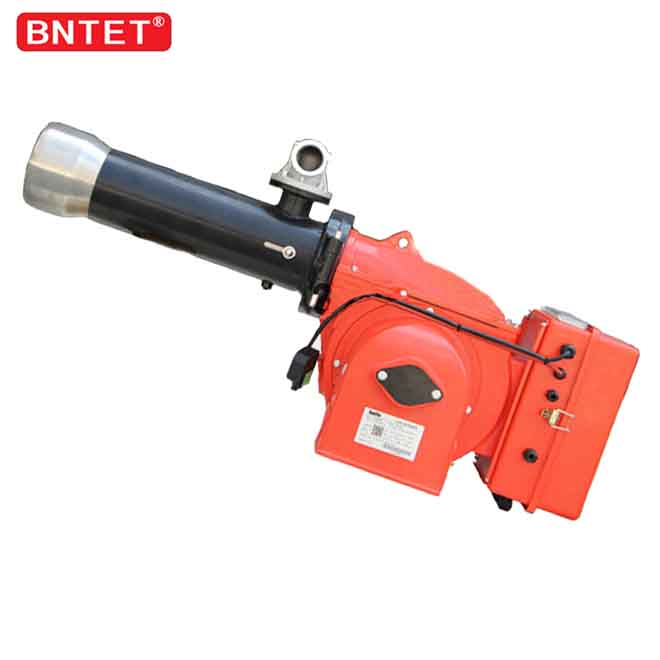
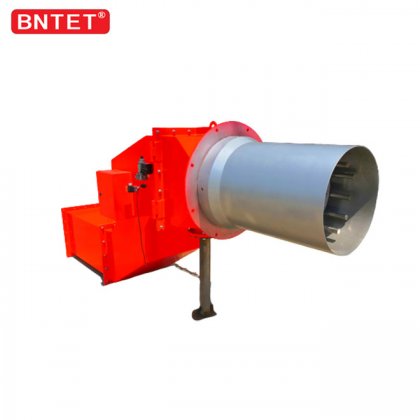
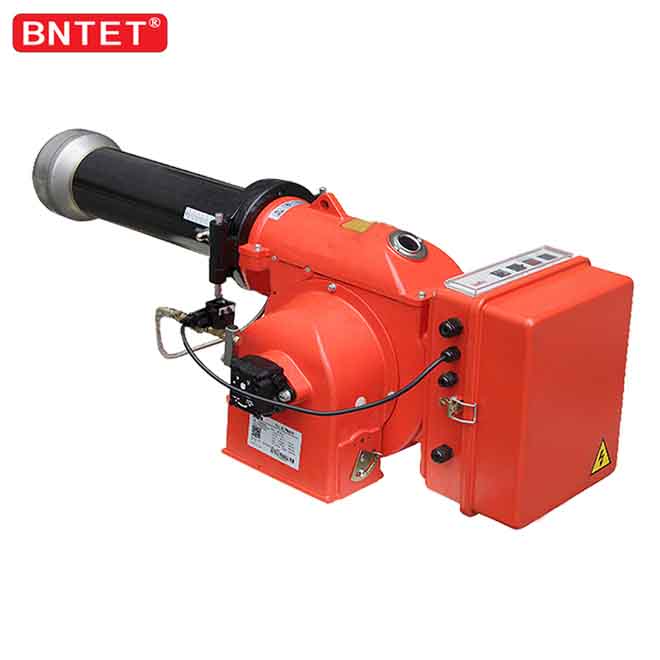
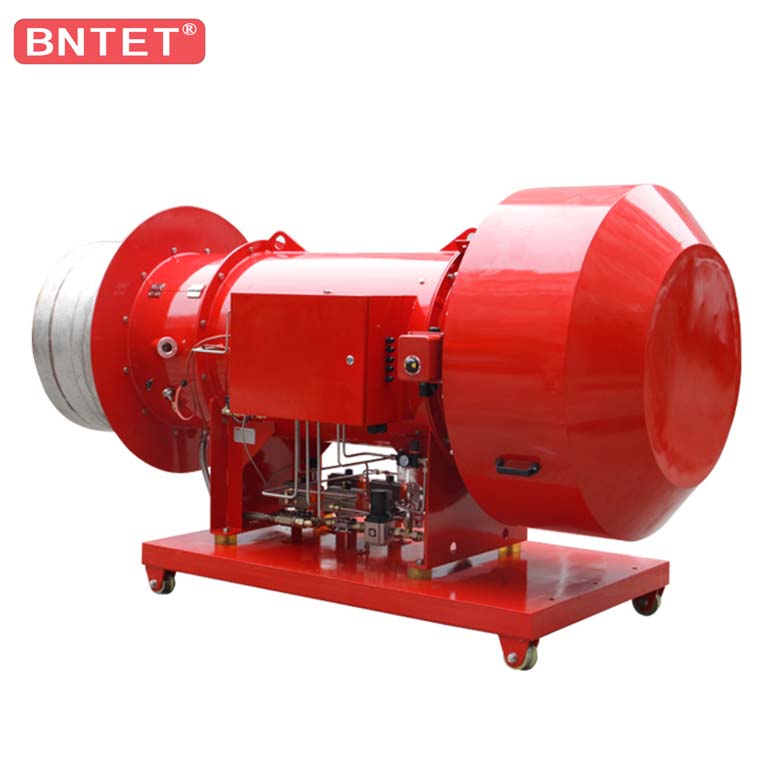
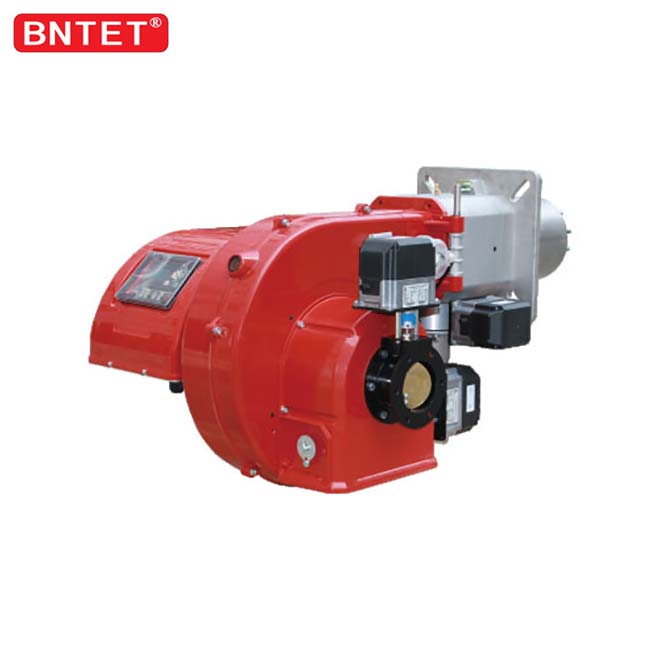
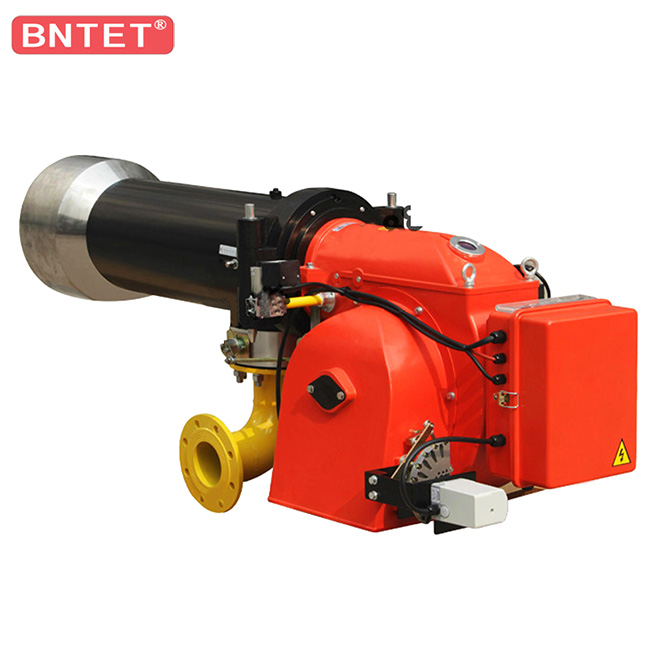
Upgrading to an advanced configuration of asphalt mixing plant burners ensures stable production rates, lower fuel overhead, and reliable compliance with industrial emissions standards[1, 4]. Bona Thermal Energy (BNTET) manufactures monoblock and split-type asphalt plant burners from 7 MW to 45 MW (suitable for 40 t/h up to 400 t/h asphalt plants), featuring electronic ratio control, multi-fuel atomization, and robust weather-resistant construction.
For burner sizing curves, dryer drum flame-length simulations, and custom plant retrofit evaluations, please
References
Turns, S. R. (2012). An Introduction to Combustion: Concepts and Applications (3rd ed.). McGraw-Hill Education.
https://www.mheducation.com/highered/product/1259025946.html Baukal, C. E. (Ed.). (2013). The John Zink Hamworthy Combustion Handbook: Applications (2nd ed., Vol. 3). CRC Press / Taylor & Francis Group.
https://doi.org/10.1201/b15112 Lefebvre, A. H., & McDonell, V. G. (2017). Atomization and Sprays (2nd ed.). CRC Press / Taylor & Francis Group.
https://doi.org/10.1201/9781315120911 Warnatz, J., Maas, U., & Kohler, R. W. (2006). Combustion: Physical and Chemical Fundamentals, Modeling and Simulation, Experiments, Pollutant Formation (4th ed.). Springer-Verlag Berlin Heidelberg.
https://doi.org/10.1007/978-3-540-45363-5 Glassman, I., Yetter, R. A., & Glumac, N. G. (2014). Combustion (5th ed.). Academic Press / Elsevier.
https://doi.org/10.1016/C2011-0-05856-7 United States Environmental Protection Agency (US EPA). (2020). AP-42: Compilation of Air Pollutant Emissions Factors (Volume I: Stationary Point and Area Sources - Chapter 11.1: Hot Mix Asphalt Plants). Office of Air Quality Planning and Standards, Research Triangle Park, NC.
https://www.epa.gov/air-emissions-factors-and-quantification/ap-42-compilation-air-emissions-factors Bayvel, L., & Orzechowski, Z. (1993). Liquid Atomization. Taylor & Francis / CRC Press.
https://doi.org/10.1201/9781482276947